


FNM considers environmental sustainability to be a fundamental pillar of its industrial strategy and a concrete commitment to the country’s ecological transition.
The Group works to reduce the impact of its activities and promote a growth model based on sustainable mobility, renewable energy and land protection.
space
Sustainable mobility is at the heart of FNM’s vision: an integrated, collective transportation system that helps reduce emissions, improve air quality, and ensure safer, more accessible and digitized travel.
space
In parallel, the Group invests in the development of clean and renewable energy, with a focus on projects related to renewable hydrogen , with low or zero CO2 emissions, an innovative energy carrier to power public transportation and infrastructure efficiently and with zero emissions.
space
FNM’s environmental commitment also extends to the protection of biodiversity and responsible management of natural resources through actions aimed at safeguarding ecosystems, redeveloping green areas and reducing waste.
space
Each initiative was created with the aim of integrating innovation, energy efficiency and respect for the environment, contributing concretely to building a more sustainable future for people and the land.
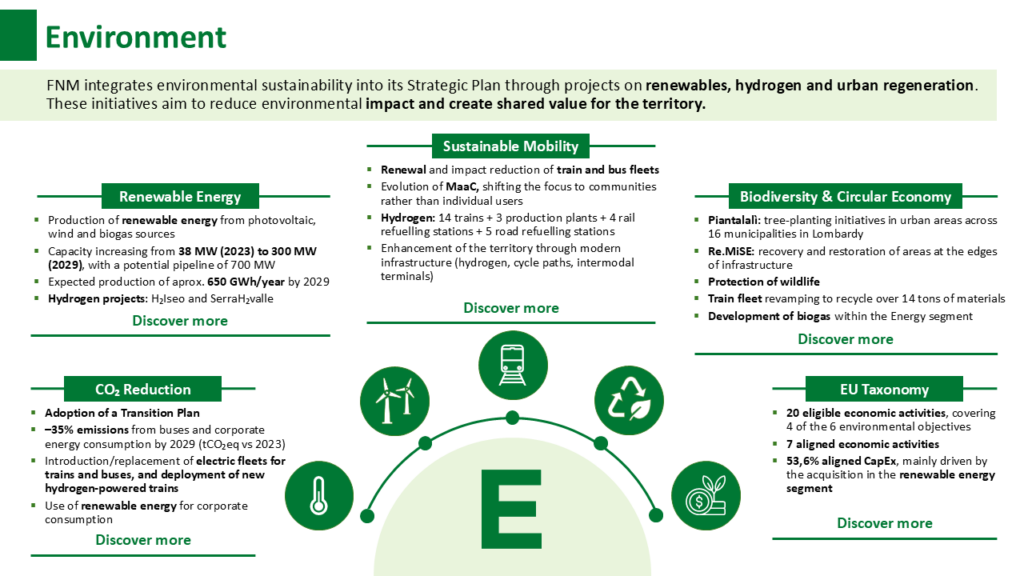
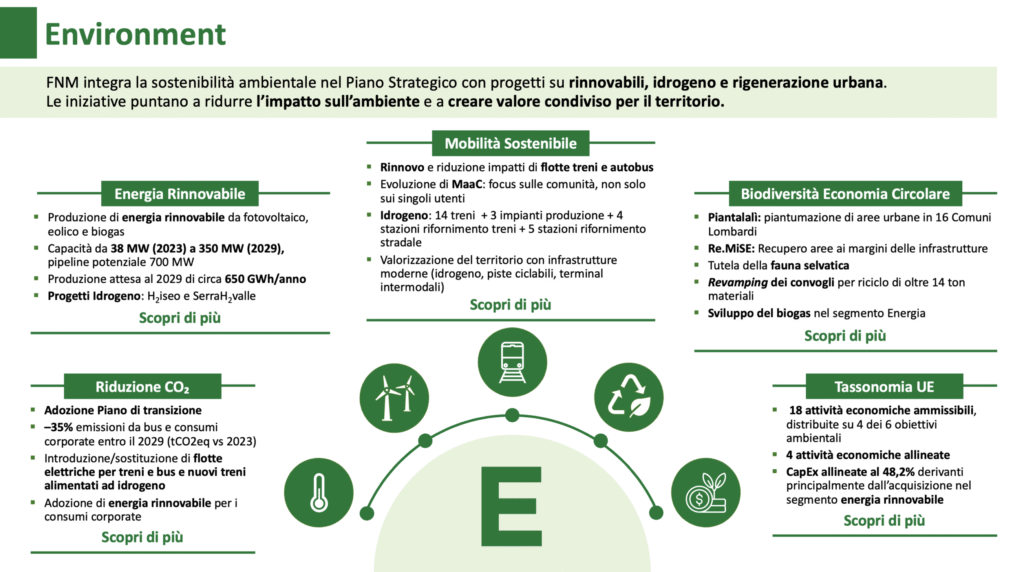
FNM integrates environmental sustainability into the Strategic Plan on renewables, hydrogen and urban regeneration.
The initiatives aim to reduce theimpact on the environment and create shared value for the area,
CO2 REDUCTION
RENEWABLE ENERGY
SUSTAINABLE MOBILITY
BIODIVERSITY CIRCULAR ECONOMY
EU TAXONOMY.
2024 data
space
The FNM Group takes concrete actions to contribute to combating climate change and protecting the environment as essential prerequisites for long-term sustainable development.
space
In this context, the Group is committed to the definition of a structured pathway for climate change mitigation and support for European targets related to the containment of global warming. The objectives outlined in the Strategic Plan 2024-2029 reflect this commitment, focusing on the formalization of a Transition Plan aimed at the decarbonization of the transport system and the reduction of greenhouse gas emissions, through a strategy that encompasses the entire scope of operations.
space
Take effective measures aimed at preventing and controlling pollutant emissions, in its own operations and along the downstream value chain, actively contributing to the reduction of air pollution. These include:
space
space
The Group has recently extended its activities to the field of renewable energy production from photovoltaic, wind and biogas sources, actively contributing to the energy transition : through a dedicated group company it is able to develop and manage, directly and with the support of its strategic partners, all the main stages of the industrial value chain:
space
space
Learn more on the Viridis Energia website
space
The Group is also engaged in the production and distribution of hydrogen for both rail and road transport.
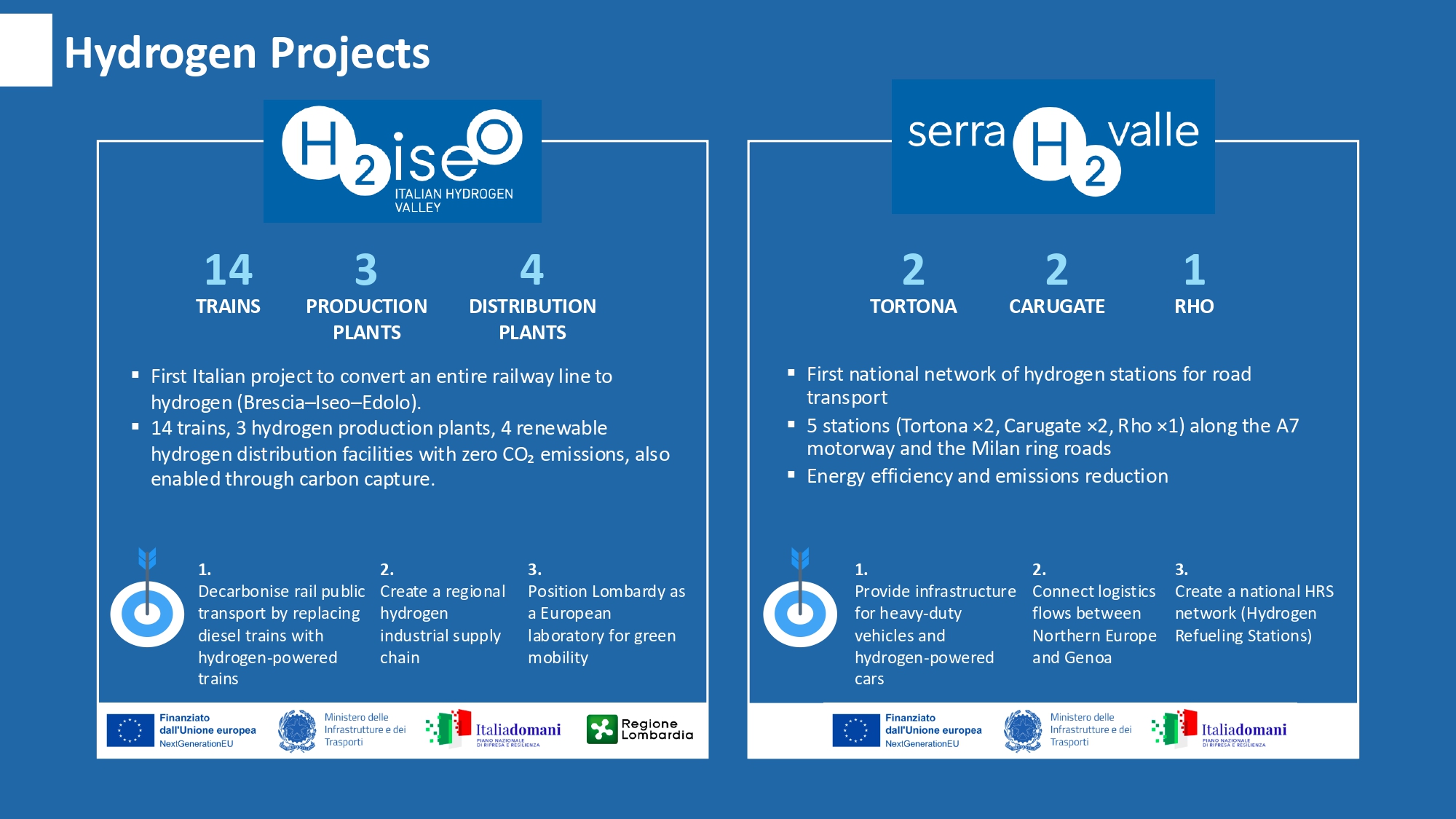
Learn more about Hydrogen Projects
space
The Group has recently extended its activities to the field of renewable energy production from photovoltaic, wind and biogas sources: actively contributing to the energy transition : through a dedicated group company it is able to develop and manage, directly and with the support of its strategic partners, all the main stages of the industrial value chain:
space
space
Learn more on the Viridis Energia website
space
The Group is also engaged in the production and distribution of hydrogen for both rail and road transport.
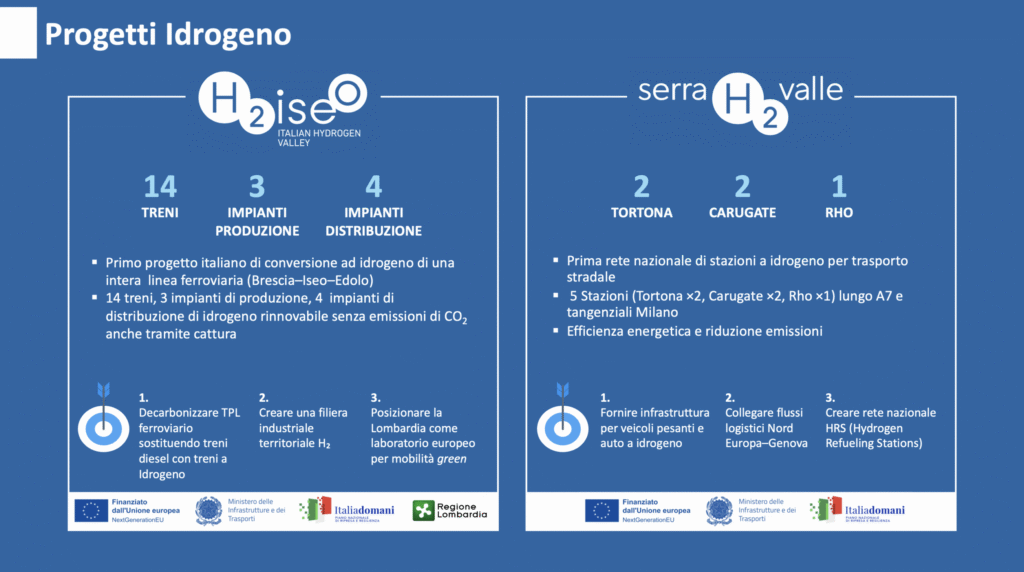
Learn more about Hydrogen Projects
space
STRINGS
FNM, FERROVIENORD and Trenord, together with the Region of Lombardy, have committed to FILI, an innovative project to redevelop FERROVIENORD’s main connection centers. On the Milan-Malpensa axis, the largest urban and suburban regeneration project in Europe is planned: a corridor for the Milan-Cortina 2026 Olympics, with new green, modern and high-visibility urban scenery, linking the Milan Cadorna, Milan Bovisa, Saronno, Busto Arsizio and Malpensa stations with an unprecedented technological and environmental journey.
space
Learn more about the WIRES Project
FNM, FERROVIENORD and Trenord, together with the Region of Lombardy, have committed to FILI, an innovative project to redevelop FERROVIENORD’s main connection centers. On the Milan-Malpensa axis, the largest urban and suburban regeneration project in Europe is planned: a corridor for the Milan-Cortina 2026 Olympics, with new green, modern and high-visibility urban scenery, linking the Milan Cadorna, Milan Bovisa, Saronno, Busto Arsizio and Malpensa stations with an unprecedented technological and environmental journey.
space
Learn more about the WIRES Project
Purchase, operation and maintenance of rolling stock
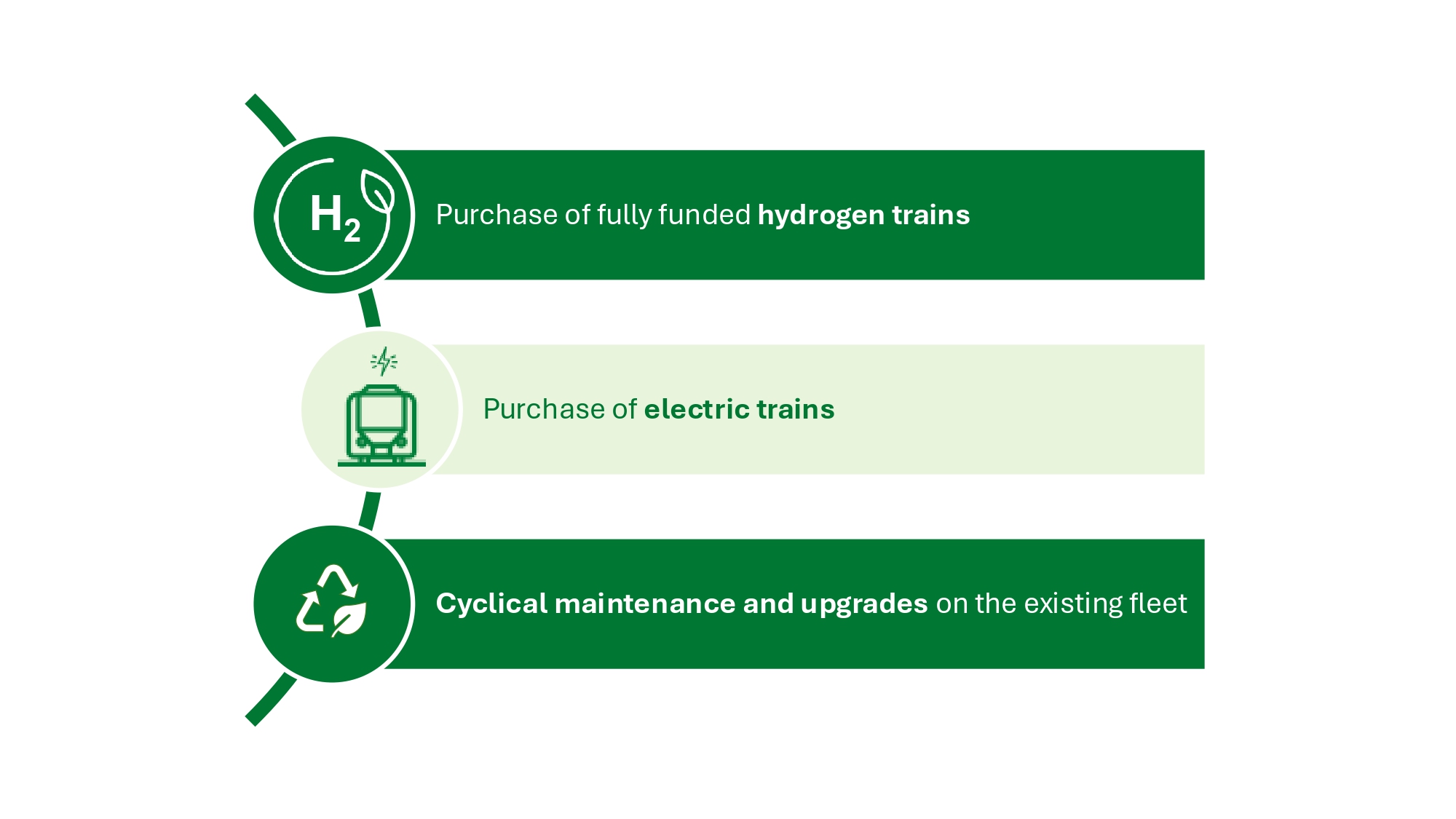
In the Ro.S.Co. segment, the Plan includes investments with its own funds earmarked for the purchase of new electric trains (Caravaggio trains) that will contribute to the renewal of the fleet and the improvement of the quality of regional rail service.
The Group also continues cyclical maintenance and improvements on the existing fleet, including revamping of existing trains ( TAF trains), mainly aimed at extending the life cycle of trainsets and improving their energy efficiency.
The FNM Group is engaged in an ongoing dialogue with its supply chain, with the aim of purchasing increasingly high-performance trains and also with a view to reducing indirect Scope 3 emissions from the value chain.
space
Intermodal transportation in support of environmental protection
A key contribution to environmental protection comes from intermodal transport, an advanced form of sustainable mobility that allows different modes of transportation to be efficiently combined for the movement of goods.
space
Intermodal transport involves the use of multiple means of transportation-such as rail, road, and ship-within the same trip, without the need for direct handling of goods at transshipment stages. This integration allows logistics flows to be optimized, reducing time, costs, and most importantly, CO₂ emissions.
space
Through a unified and integrated view of the supply chain, intermodality transforms transportation from a sum of separate activities to a continuous and coordinated service that unites origin and destination in one sustainable process.
space
Learn more on the Malpensa Intermodal website
space
space
The protection of biodiversity and ecosystems is a key commitment for the FNM Group in its environmental initiatives.
space
Piantalali
Piantalalì is FNM ‘s project dedicated to the protection and enhancement of the natural heritage through the planting of trees and the creation of new green spaces in the areas where the Group operates. The initiative contributes to offsetting CO₂ emissions, fosters urban and peri-urban biodiversity and promotes a culture of sustainability shared with local areas and communities.
space
Learn more about Piantalalis
space
RE.MISE
In collaboration with the Fondazione Lombardia per l’Ambiente (FLA), the Autostrade sector has initiated an analysis of the naturalistic-environmental status of some relict areas on the edge of the managed infrastructure, as part of the Re.MISE project – Recovery and Environmental Improvement of Milan Serravalle’s Relics. Improvement and conservation interventions are planned, identifying priorities for each area analyzed. An Action Plan will also be developed to guide future activities, ensuring a focused approach to environmental rehabilitation.
space
Wildlife protection initiatives
To strengthen the management and protection of wildlife along infrastructure, collaboration continues with agencies specializing in the rescue of injured animals. This objective is also achieved with training courses aimed at officers of the road service, to provide operational instructions on the management of wild and domestic animals involved in road accidents, as well as the conclusion of agreements with Veterinary Ambulances Italy, aimed at ensuring a structured first aid service for injured wild animals, ensuring their transfer to territorial Recovery Centers for the necessary treatment.
space
FNM promotes efficient use of resources throughout the life cycle of materials, encouraging the reuse, recycling and recovery within their processes and industrial supply chains. The goal is to reduce waste, limit the production of waste and valorize by-products as new resources, with a view to sustainability and continuous innovation. The actions implemented reflect an integrated approach, declined in the Group’s different operating segments.
The Highways sector is active in reducing the use of virgin resources and enhancing the use of recycled materials by integrating sustainable solutions into its processes and in identifying its suppliers with tendering procedures.

In the Rail Infrastructure sector, the reorganization of technical interventions has made it possible to significantly reduce waste from ordinary and extraordinary maintenance. Management is entrusted to qualified companies, selected through tenders with quality control and certification. The revamping of the trainsets represents an important initiative, enabling the recycling of 14.15 tons of materials in 2024.

In the Local Public Transport segment, measures have been taken to improve waste management at depots, including the application of the waste hierarchy, prioritizing prevention, reuse, recycling and recovery, while minimizing disposal. |

Biogas plants in the Energy segment are fully within the scope of using by-products from food and agro-industrial activities. The feed recipe allows biogas plants to generate electricity in full compliance with circular economy principles and without the use of new resources. |
space
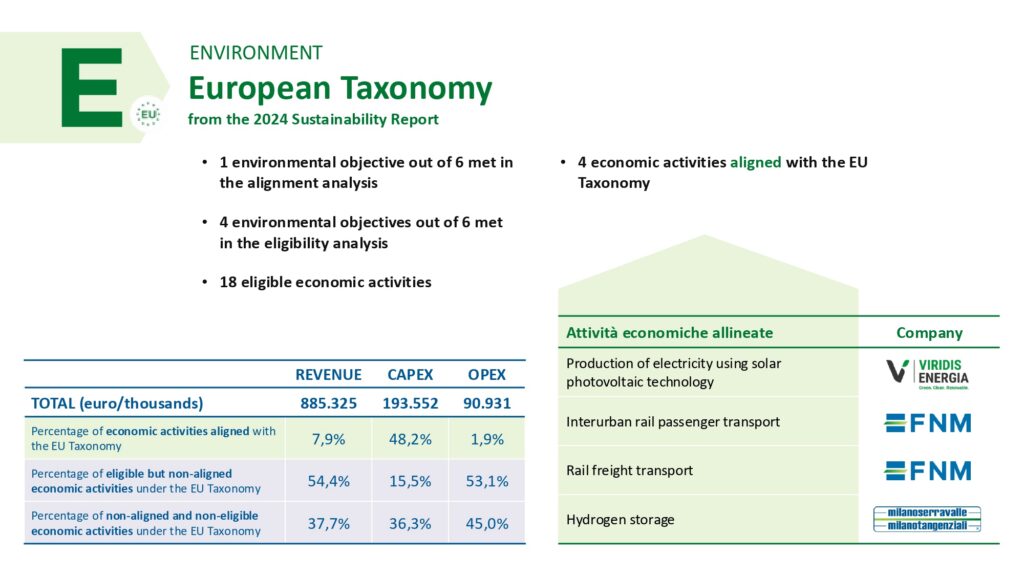
The European Taxonomy, introduced by Regulation (EU) 852/2020 and in application since January 1, 2022, defines an unambiguous and integrated system at the European level and classifies economic activities that can contribute to the achievement of six environmental and climate goals:
space
1. Climate change mitigation;
2. Adaptation to climate change;
3. Sustainable use and protection of water and marine resources;
4. Transition to a circular economy;
5. Pollution prevention and reduction;
6. Protection and restoration of biodiversity and ecosystems.
space
Summary of FNM Group’s results for 2024:
Per la trasmissione e lo stoccaggio delle Informazioni Regolamentate, la Società si avvale del sistema di diffusione eMarket SDIR e del meccanismo di stoccaggio eMarket STORAGE disponibile all’indirizzo www.emarketstorage.com gestiti da Spafid Connect S.p.A., con sede in Foro Buonaparte 10, Milano.
Per la trasmissione e lo stoccaggio delle Informazioni Regolamentate, la Società si avvale del sistema di diffusione eMarket SDIR e del meccanismo di stoccaggio eMarket STORAGE disponibile all’indirizzo www.emarketstorage.com gestiti da Spafid Connect S.p.A., con sede in Foro Buonaparte 10, Milano.

