Environment
FNM considers environmental sustainability to be a fundamental pillar of its industrial strategy and a concrete commitment to the country’s ecological transition.
The Group works to reduce the impact of its activities and promote a growth model based on sustainable mobility, renewable energy and land protection.
Sustainable mobility is at the heart of FNM’s vision: an integrated, collective transportation system that helps reduce emissions, improve air quality, and ensure safer, more accessible and digitized travel.
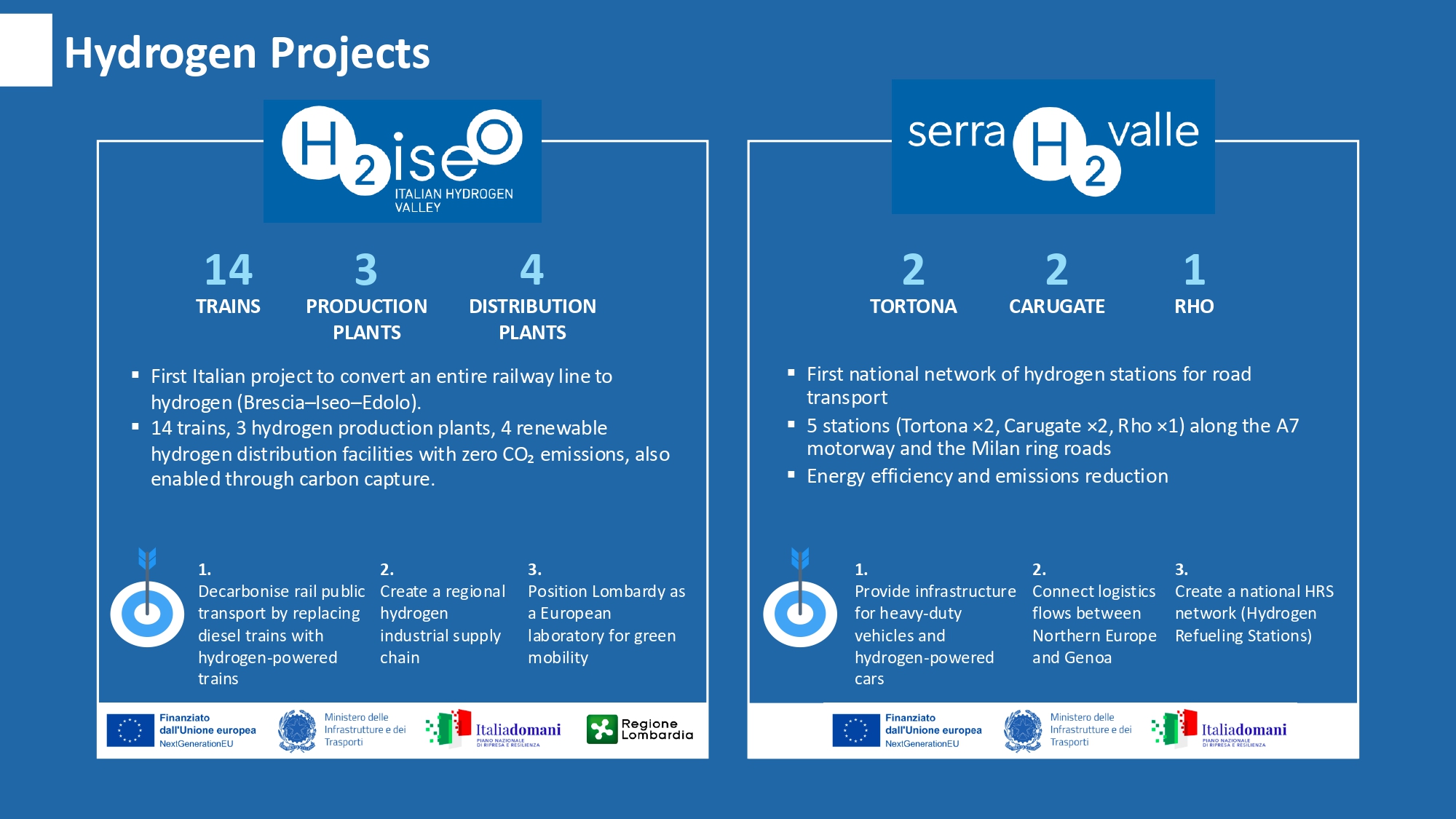
In parallel, the Group invests in the development of clean and renewable energy, with a focus on projects related to renewable hydrogen , with low or zero CO2 emissions, an innovative energy carrier to power public transportation and infrastructure efficiently and with zero emissions.
FNM’s environmental commitment also extends to the protection of biodiversity and responsible management of natural resources through actions aimed at safeguarding ecosystems, redeveloping green areas and reducing waste.
Each initiative was created with the aim of integrating innovation, energy efficiency and respect for the environment, contributing concretely to building a more sustainable future for people and the land.
Environment
FNM integrates environmental sustainability into its Strategic Plan through projects focusing on renewable energy, hydrogen and urban regeneration.
These initiatives aim to reduce environmental impact and create shared value for the local communities.

C02 Reduction
- Adoption of a Transition Plan
- –35% emissions from buses and corporate energy consumption by 2029 (tCO₂eq vs 2023)
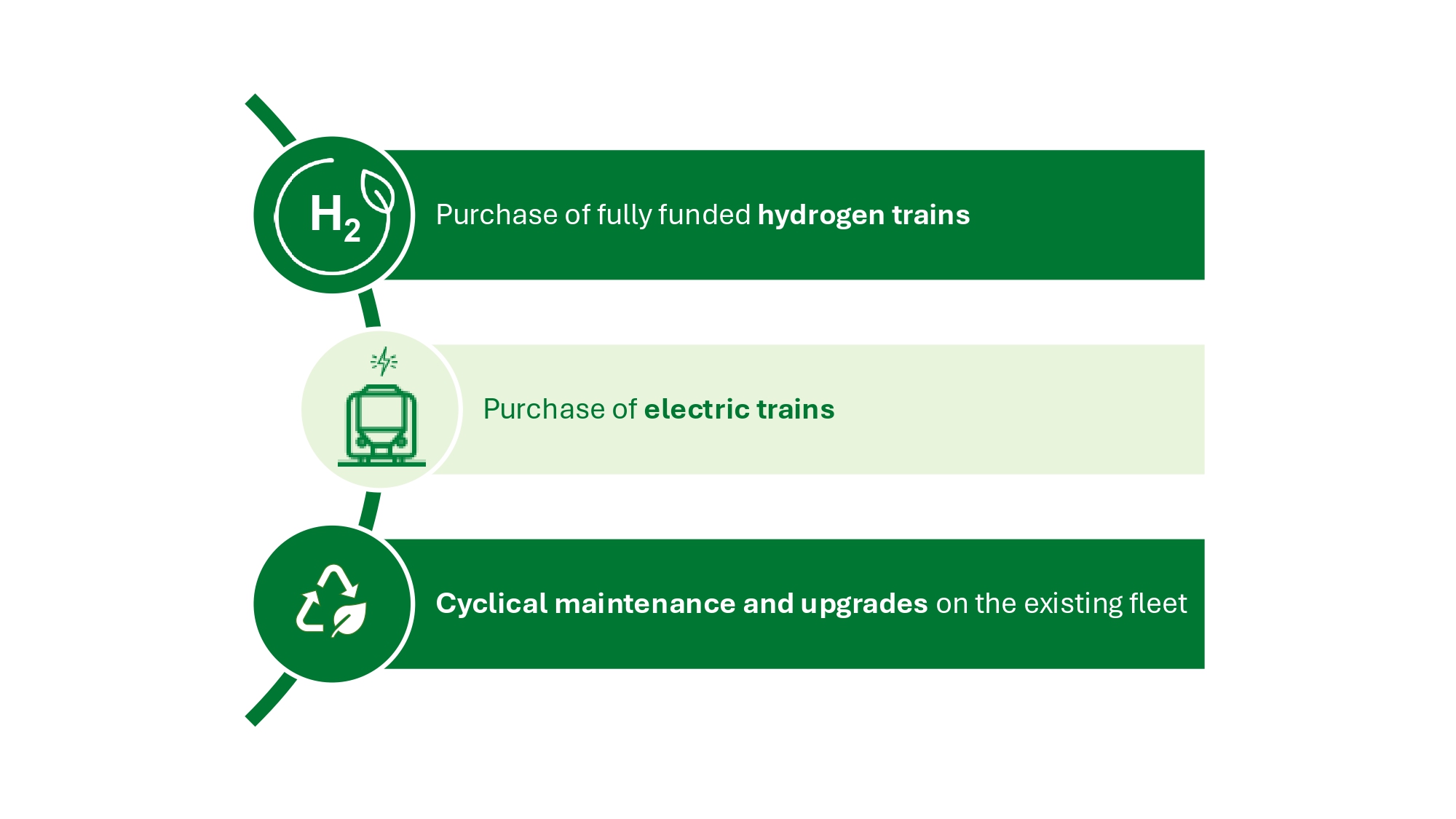
- Introduction and replacement of electric train and bus fleets, and deployment of new hydrogen-powered trains
- Use of renewable energy for corporate consumption

Renewable Energy
- Production of renewable energy from photovoltaic, wind and biogas sources
- Capacity increasing from 38 MW (2023) to 300 MW (2029), with a potential pipeline of 700 MW
- Expected production of approx. 650 GWh/year by 2029
- Hydrogen projects: H₂Iseo and SerraH₂valle

Sustainable Mobility
- Renewal and impact reduction of train and bus fleets
- Evolution of MaaC, shifting the focus to communities rather than individual users
- Hydrogen: 14 trains + 3 production plants + 4 rail refuelling stations + 5 road refuelling stations
- Enhancement of the territory through modern infrastructure (hydrogen, cycle paths, intermodal terminals)

Biodiversity & Circular Economy
- Piantalalì: tree-planting initiatives in urban areas across 16 municipalities in Lombardy
- Re.MiSE: recovery and restoration of areas at the edges of infrastructure
- Protection of wildlife
- Train fleet: revamping to recycle over 14 tons of materials
- Development of biogas within the Energy segment

EU Taxonomy
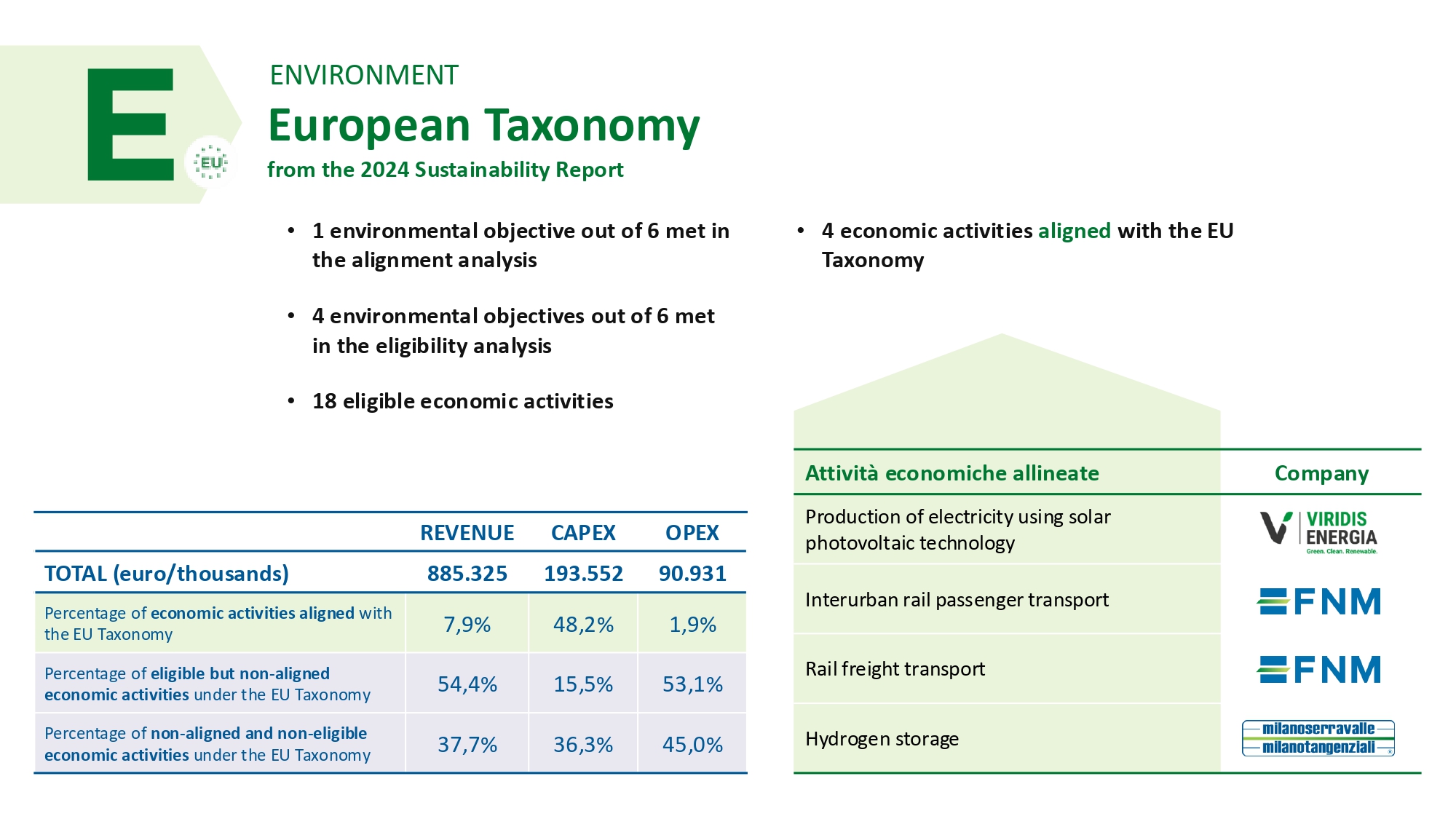
- 20 eligible economic activities, covering 4 of the 6 environmental objectives
- 7 aligned economic activities
- 53,6% aligned CapEx, mainly driven by the acquisition in the renewable energy segment

Contacts
Talk to the Sustainability Team
For any requests, information, questions, comments or suggestions regarding the Group’s Sustainability activities, our team is at your disposal.